

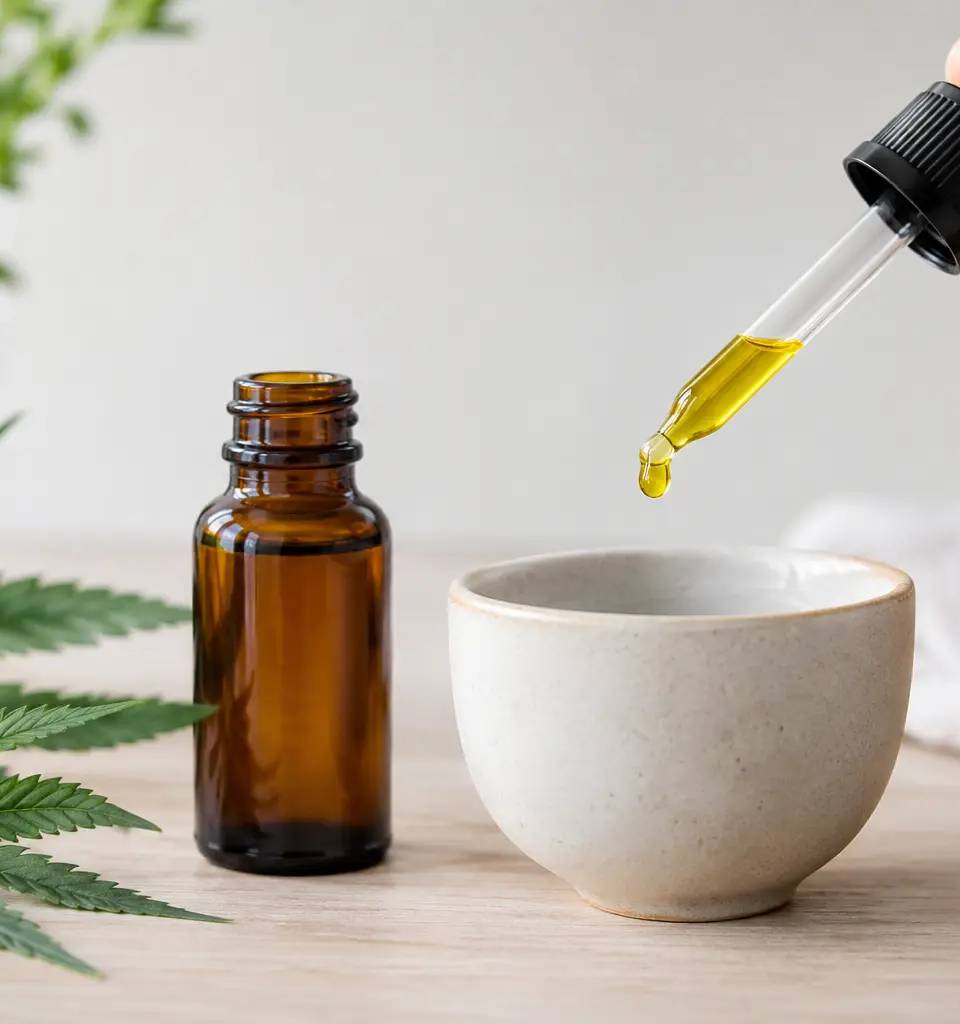
Start with the label, not the dropper
Cannabis oil is not one-size-fits-all. Two people can take the same amount and have completely different experiences depending on their tolerance, body weight, metabolism, whether they have eaten, and the balance of THC and CBD in the oil. Start with the product in front of you, not a dose somebody else says works for them.
Before taking any cannabis oil, check whether the label states THC, CBD, or both. These compounds can feel very different. THC is the psychoactive cannabinoid most associated with a noticeable high, while CBD is non-intoxicating but can still affect how calm, sleepy or alert you feel.
Look for three pieces of information: the total cannabinoid content in the bottle, the amount per millilitre, and the amount in one full dropper or serving. A 10 ml bottle containing 500 mg of THC, for example, contains 50 mg per ml. If the dropper holds 1 ml, a full dropper is 50 mg - far too much for many people with little or no THC tolerance.
Do not rely on “a few drops” unless the bottle explains how many milligrams those drops contain. Drop sizes vary between droppers, and strength can differ massively from one oil to another. Milligrams are the useful measurement. Drops are only a delivery method.
If the label is unclear, ask the supplier for the concentration before using it. Premium cannabis products should make it easy to understand what you are taking.
How to dose cannabis oil for the first time
For an adult trying a THC-containing oil for the first time, a low starting point is usually around 1 to 2.5 mg of THC. People who are especially sensitive to cannabis may prefer to begin at 1 mg or less. This can sound like a tiny amount, but it is enough to assess your individual response without turning a chilled evening into an uncomfortable one.
A cautious first session should be simple. Take your chosen dose when you have no driving, work, swimming, cooking or important plans ahead. Stay somewhere comfortable, eat normally, drink water, and avoid mixing cannabis oil with alcohol or other intoxicants. Taking it alongside alcohol can make dizziness, nausea, poor judgement and anxiety more likely.
If you are using a balanced THC and CBD oil, the CBD may soften some of THC’s sharper edges for some people. It does not cancel out THC, though, and it does not make a large THC dose a sensible idea. Treat the THC amount as your main guide.
For CBD-dominant oil with little or no THC, people often begin around 5 to 10 mg of CBD and adjust gradually. CBD can still cause tiredness, stomach upset or interactions with some medicines, so low and slow remains the best approach.
Take a measured amount, write down the time and milligrams, then wait. Keeping a brief note on your phone can be surprisingly useful: record the product, THC and CBD content, dose, whether you had eaten, and how you felt. After a few sessions, you will have a much clearer picture of what suits you.
Avoid increasing the dose on the same day unless you fully understand the product’s onset and duration. The temptation to top up is where many people overdo it, particularly with oils that are swallowed.
Sublingual oil versus swallowed oil
How you take the oil changes how quickly it may take effect. If you place it under the tongue and hold it there for around 60 to 90 seconds before swallowing, some cannabinoids can be absorbed through the tissues in the mouth. Effects may begin in roughly 15 to 45 minutes, although this varies.
When cannabis oil is swallowed straight away, it behaves more like an edible. Your digestive system and liver process it first, so effects can take 45 minutes to two hours or sometimes longer. The experience may also feel stronger and last longer than expected.
A full stomach can slow the onset, while a meal containing fat may change how cannabinoids are absorbed. There is no perfect universal timing, but consistency helps. If you take the same oil in the same way each time, preferably at a similar point relative to food, it becomes easier to judge your dose.
For THC oil taken by mouth, wait at least two hours before deciding it has not worked. For some people, waiting three hours is the wiser move. A delayed effect is not a weak effect.
Increase slowly, one change at a time
If your first dose feels too mild, increase only slightly next time. With THC oil, an increase of 1 to 2.5 mg at a time is a measured approach for newer consumers. Give each new dose a separate session to show you what it actually does.
Once you have found a pleasant effect, resist the urge to keep increasing simply because you can. More THC does not always mean more enjoyment. Higher doses are more likely to bring dry mouth, heavy limbs, racing thoughts, anxiety, dizziness or an uncomfortable feeling of being overly high.
Tolerance matters too. Someone who uses cannabis frequently may need more THC than a person returning after a long break. But tolerance can shift quickly after a few days away, illness, poor sleep, changes in medication or a different product. Treat every new oil as a fresh calculation, especially concentrates with high THC levels.
Know when to pause and get support
Cannabis oil is not a good choice before driving, cycling in traffic, using machinery, or doing anything that needs fast reactions and sound judgement. Effects can outlast the obvious high, particularly when the oil has been swallowed.
Speak with a doctor or pharmacist before using cannabis oil if you take prescription medication, especially medicines for blood thinning, seizures, mood, sleep, blood pressure or heart conditions. Extra caution is sensible if you have a personal or family history of psychosis, severe anxiety or bipolar disorder. Avoid THC during pregnancy or breastfeeding.
If you take more THC than intended and feel uncomfortable, remind yourself that the feeling will pass. Move to a quiet, familiar place, sip water, avoid alcohol or other substances, and stay with a trusted sober person if possible. Slow breathing and a calm environment can help. Seek urgent medical advice for severe symptoms such as chest pain, fainting, trouble breathing, extreme confusion, or if someone cannot be safely supervised.
Choose control over bravado
The best cannabis oil dose is not the biggest amount you can handle. It is the smallest amount that gives you the effect you actually want, whether that is a gentle evening wind-down, a lighter mood or a more settled body feel.
A carefully measured dose gives you more control over your experience and more confidence with every bottle. Start low, wait properly, keep notes, and let your own response set the pace.
For more background, see how a club differs from a coffeeshop and our frequently asked questions, or read How to Use Cannabis Edibles Without Overdoing It.