

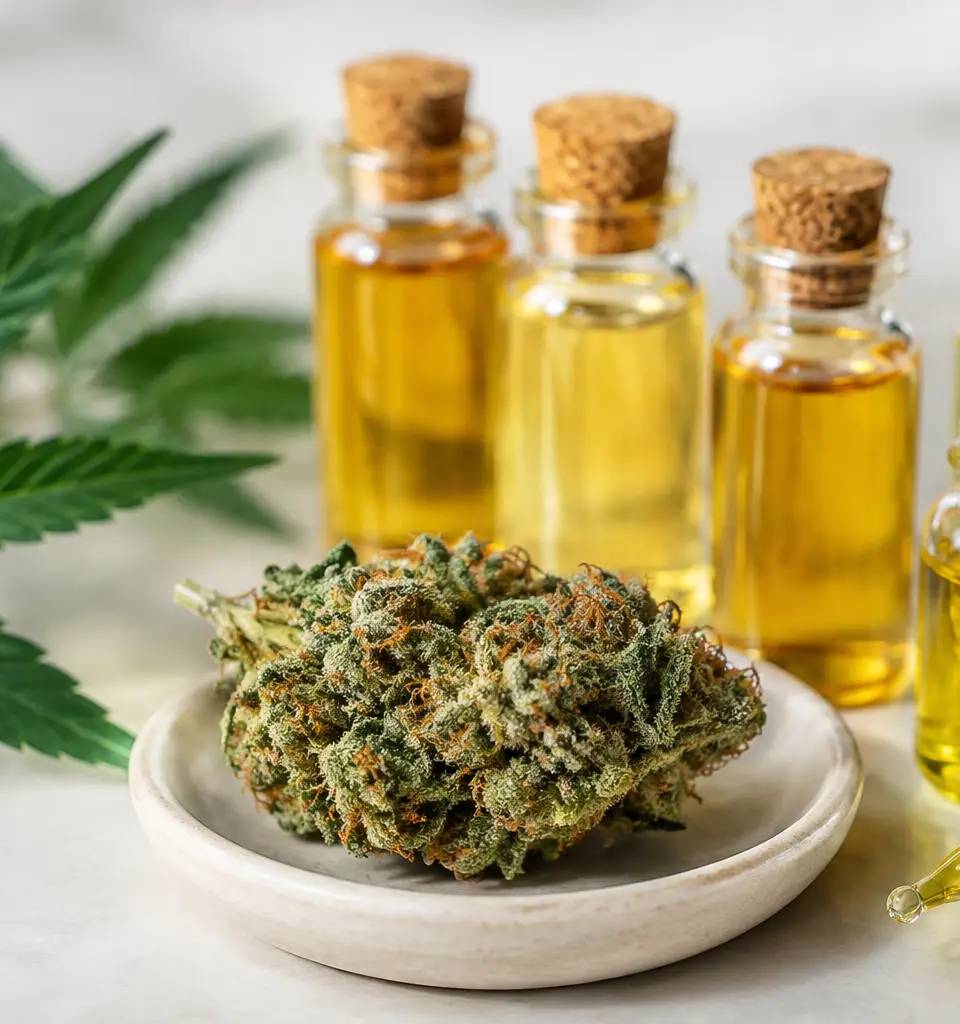
What are cannabis terpenes?
For people who enjoy quality flower, concentrates or vapes, terpenes offer a better way to choose than simply asking whether a product is indica or sativa. They can help you narrow down the flavours, aromas and overall style you are likely to enjoy. They are not a guarantee of one exact experience, because cannabinoid content, dose, consumption method and your own tolerance all matter too. Still, learning the basics makes choosing your next strain far more interesting.
Terpenes are natural aromatic compounds found throughout the plant world. They are present in citrus peel, pine needles, lavender, black pepper, herbs and cannabis. In cannabis, they are produced in the resinous trichomes alongside cannabinoids such as THC and CBD.
Their most obvious job is sensory. Terpenes create the fresh lemon edge, tropical sweetness, diesel funk, floral lift or peppery finish that makes one jar of flower smell completely different from another. That aroma becomes flavour when cannabis is consumed, although very high temperatures can mute or alter the more delicate notes.
The terpene profile can vary even within the same named strain. Growing conditions, harvest timing, curing, storage and processing all influence the final result. A well-grown, properly cured batch of Gorilla Glue may show pungent earth, pine and fuel, while another phenotype or batch may lean noticeably more citrusy or spicy. The strain name is a useful starting point, not a full tasting note.
The main cannabis terpenes to know
There are many terpenes in cannabis, often appearing together in different ratios. You do not need to memorise every one. Knowing a handful of common names and their aromas is enough to shop with more confidence.
Myrcene is one of the most frequently found terpenes in cannabis. Its profile is earthy, musky and herbal, sometimes with a ripe mango-like note. It is often associated with classic, fuller-bodied varieties and can feature in strains with rich, grounded flavour profiles.
If you tend to enjoy dense, old-school aromas rather than bright fruit or sharp citrus, myrcene-forward flower may appeal. It is common to find it alongside other terpenes rather than on its own, adding depth underneath sweeter or gassier notes.
Limonene brings a lively citrus character, ranging from lemon zest to orange peel and sweet sherbet. It is a familiar feature in many Haze varieties and fruity cultivars, which is one reason those profiles can feel so fresh and expressive on the nose.
For a bright, clean flavour direction, limonene is a useful terpene to look for. It can work beautifully in flower and is especially noticeable in well-made vape products, where citrus terpenes often come through clearly.
Beta-caryophyllene has a peppery, warm and slightly woody aroma. Think cracked black pepper, cloves and dry spice rather than sweetness. It is found in many herbs and spices as well as cannabis, and it often gives fuel-heavy or earthy strains a more savoury edge.
Caryophyllene can be a good signpost for anyone who likes OG-style profiles, Cookies genetics or flower with a bit of bite. It often sits comfortably beside limonene and myrcene, creating flavours that are citrusy, peppery and deep all at once.
As the name suggests, pinene smells of pine, rosemary and fresh woodland. It can make a terpene profile feel crisp and clean, cutting through heavier notes with a resinous, herbal lift.
Pinene is often appreciated by people who enjoy traditional Haze, Jack Herer-style or pine-forward cultivars. It is not always the loudest terpene in a jar, but when it is prominent, you will usually notice that fresh green edge straight away.
Linalool is floral, soft and lightly herbal, with a scent often compared to lavender. It tends to appear in smaller amounts than myrcene or limonene, but it can bring an elegant, perfumed quality to a strain.
It is worth seeking out if you prefer gentler floral notes over loud gas, candy or citrus. Linalool can be especially appealing in flower with purple or dessert-style genetics, though the terpene itself is not limited to one visual style or strain family.
Humulene has earthy, woody and hoppy notes, which makes sense because it is also found in hops. It can add a dry, herbal bitterness that balances sweeter terpenes and gives a profile more structure.
People who find ultra-sweet candy strains a little too much may enjoy humulene in the mix. It is often part of the background rather than the headline, but it makes a real difference to how rounded a strain smells and tastes.
Terpenes are not a shortcut to a guaranteed effect
It is tempting to see a terpene chart and assume it can predict precisely how you will feel. Real life is less tidy. Cannabis contains a changing combination of cannabinoids, terpenes and other plant compounds, while your own experience is shaped by tolerance, setting, amount and how quickly you consume.
You may hear the phrase “entourage effect” used to describe the idea that these compounds work together. It is a useful way to think about the plant as a whole, but it should not become a promise. A limonene-rich cultivar may smell wonderfully uplifting to one person, while another simply enjoys the taste. Treat terpene information as a guide to character and preference, not a medical claim or a fixed outcome.
This is also why starting gently with an unfamiliar product makes sense, particularly with potent concentrates, hash oil, wax and edibles. Edibles can take longer to come on and last longer than inhaled products, so patience matters. If you are trying a new terpene profile, give yourself time to appreciate it rather than rushing into a second dose.
How to choose a terpene profile you will enjoy
Start with your senses. If you already know you like lemon sweets, grapefruit, orange peel or fresh herbs, ask about strains with limonene and pinene in the profile. If your preference is for earthy, peppery, gassy or old-school cannabis aromas, look towards myrcene, caryophyllene and humulene.
Then think about format. Flower usually offers the fullest expression of a cultivar’s natural aroma, especially when it has been stored correctly. Vapes can be exceptionally flavourful and convenient, although their terpene profiles can vary depending on how they are made. Concentrates can be intense, with a small amount delivering a lot of flavour, so they suit people who are already comfortable with stronger products.
Freshness matters more than many people realise. Terpenes are volatile compounds, meaning they can fade with heat, air and light. Flower that is dry, poorly stored or left exposed for too long may lose much of its original aroma. Keep products sealed, cool and out of direct sunlight, and avoid leaving them in a hot car after a day at the beach.
It also pays to ask a simple, specific question rather than only asking for “the strongest” option. Try: “What is your most citrus-forward flower?” or “Which option has an earthy OG flavour?” A good recommendation becomes easier when you describe flavours you genuinely enjoy.
A better way to read strain names
Names such as Amnesia Haze, Gary Payton, OG Kush and Zkittlez can point towards familiar genetics and flavour families, but they are not a substitute for checking the actual batch. One Zkittlez may be juicy and candy-like, while another is more tropical with a peppery finish. One OG Kush might lean strongly towards lemon and pine, while another is darker, earthier and more fuel-forward.
Use the name to set expectations, then let aroma, freshness and terpene information make the final decision. That approach keeps the experience personal and stops you missing a brilliant product simply because its label is unfamiliar.
For Costa del Sol consumers who want more from their selection, a quick conversation about flavour can transform the choice. Jamacanna can help point you towards a profile that suits your taste, whether that means bright Haze citrus, sweet fruit, classic Kush earthiness or a deeper gas-and-spice finish. The best terpene profile is not the one with the biggest claim - it is the one you are genuinely looking forward to smelling, tasting and enjoying.
For more background, see the club glossary, or read Cannabis Flower: Pick a Strain You’ll Enjoy.